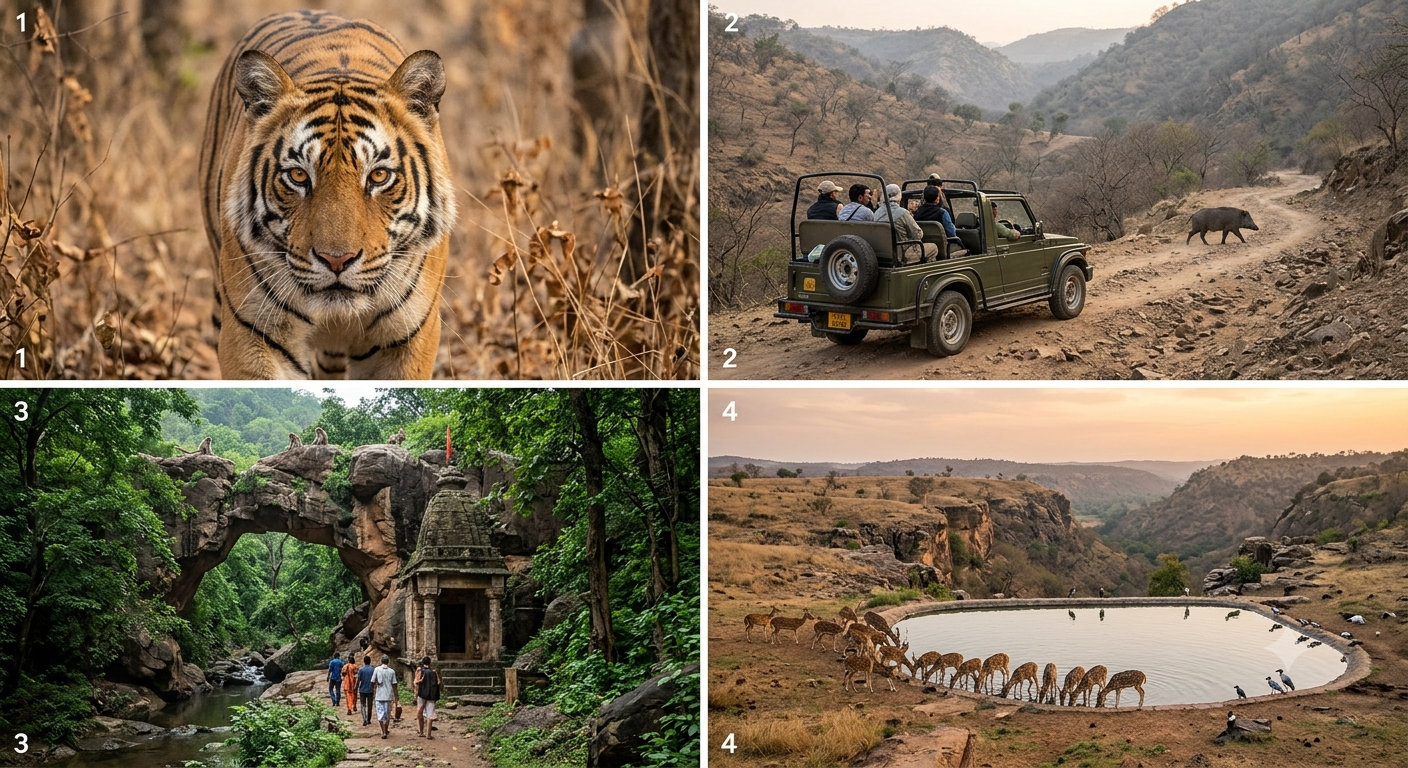
Nestled in the rugged folds of the ancient Aravalli Hills in Rajasthan’s Alwar district, Sariska Tiger Reserve is one of India’s most celebrated wildlife destinations. Located just a few hours' drive from both New Delhi and Jaipur, this sprawling forest offers an unmatched blend of thrilling Royal Bengal Tiger sightings, rich birdlife, and centuries-old historical ruins.
Whether you are a wildlife photographer, a nature enthusiast, or a family looking for a refreshing weekend getaway, planning ahead is the key to a memorable jungle experience. Here is everything you need to know before visiting Sariska National Park.
1. Why Sariska Tiger Reserve is Special
Spread across roughly 1,213 sq. km, Sariska holds a historic place in global wildlife conservation. In 2008, it became the first reserve in the world to successfully relocate Royal Bengal Tigers and rebuild a thriving population.
Beyond tigers, the dry deciduous forests and rocky valleys of Sariska are home to:
- Predators & Mammals: Indian leopards, striped hyenas, jungle cats, caracals, golden jackals, sambar deer, spotted deer (chital), nilgai, and the rare four-horned antelope (chousingha).
- Avian Biodiversity: Over 220 species of resident and migratory birds, including the crested serpent eagle, golden-backed woodpecker, grey partridge, sandgrouse, and Indian peafowl.
2. Best Time to Visit Sariska National Park
Your ideal travel window depends entirely on what kind of experience you are looking for:
- Winter (October to March) – Best for Pleasant Weather: This is the peak tourist season. The weather is cool and comfortable, the forest looks lush after the monsoon, and migratory birds are active. It is ideal for families and sightseeing.
- Summer (April to June) – Best for Tiger Sightings: While temperatures can cross 40°C, summer offers the highest probability of spotting Royal Bengal Tigers and leopards. As natural water sources dry up, predators frequently visit the park's waterholes.
- Monsoon (July to September) – Core Zones Closed: The core safari zones remain closed from July 1st to September 30th for forest regeneration and wildlife breeding. However, the route to the Pandupol Hanuman Temple remains open on Tuesdays and Saturdays.
3. Understanding Safari Zones & Entry Gates
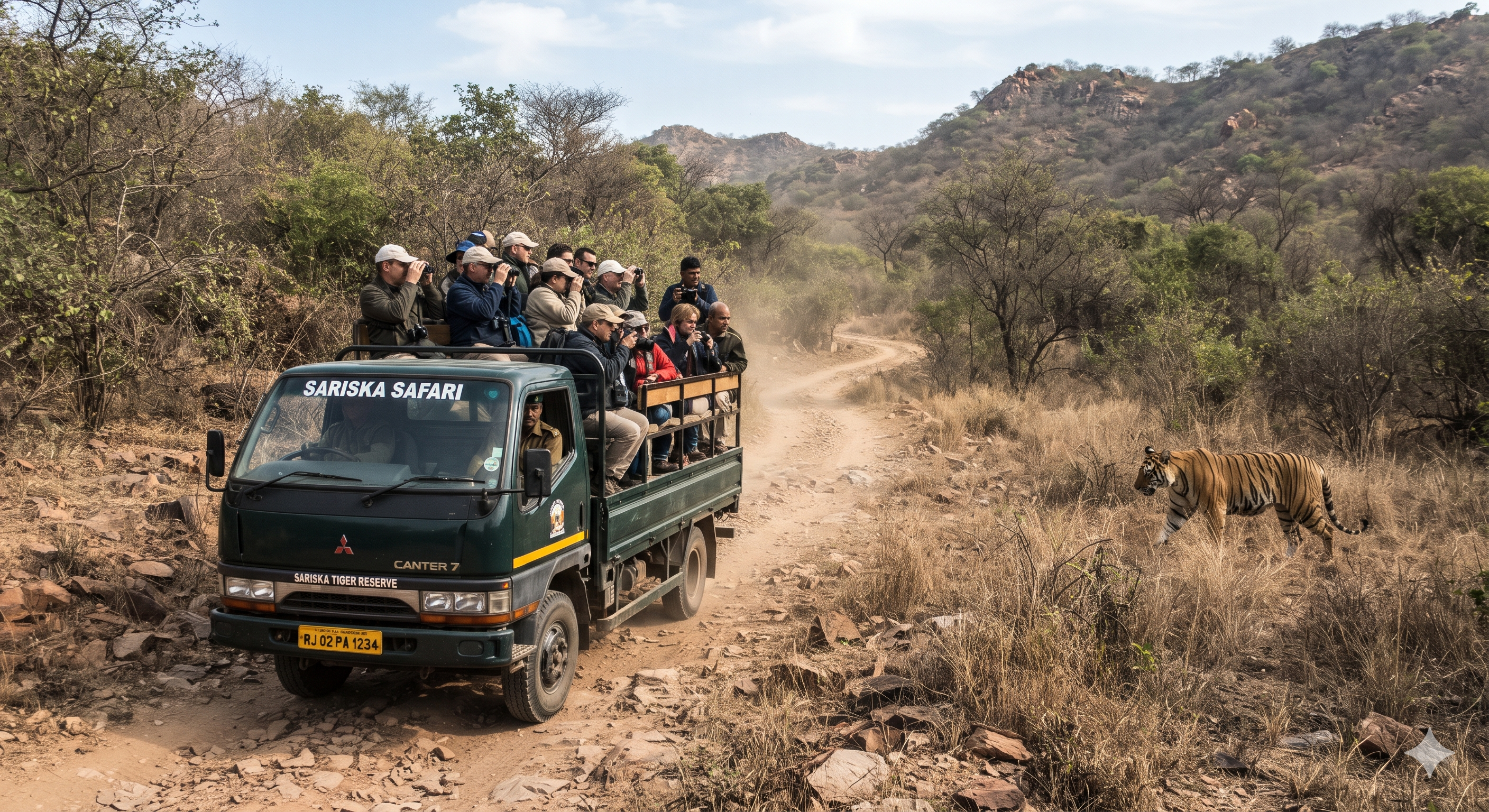
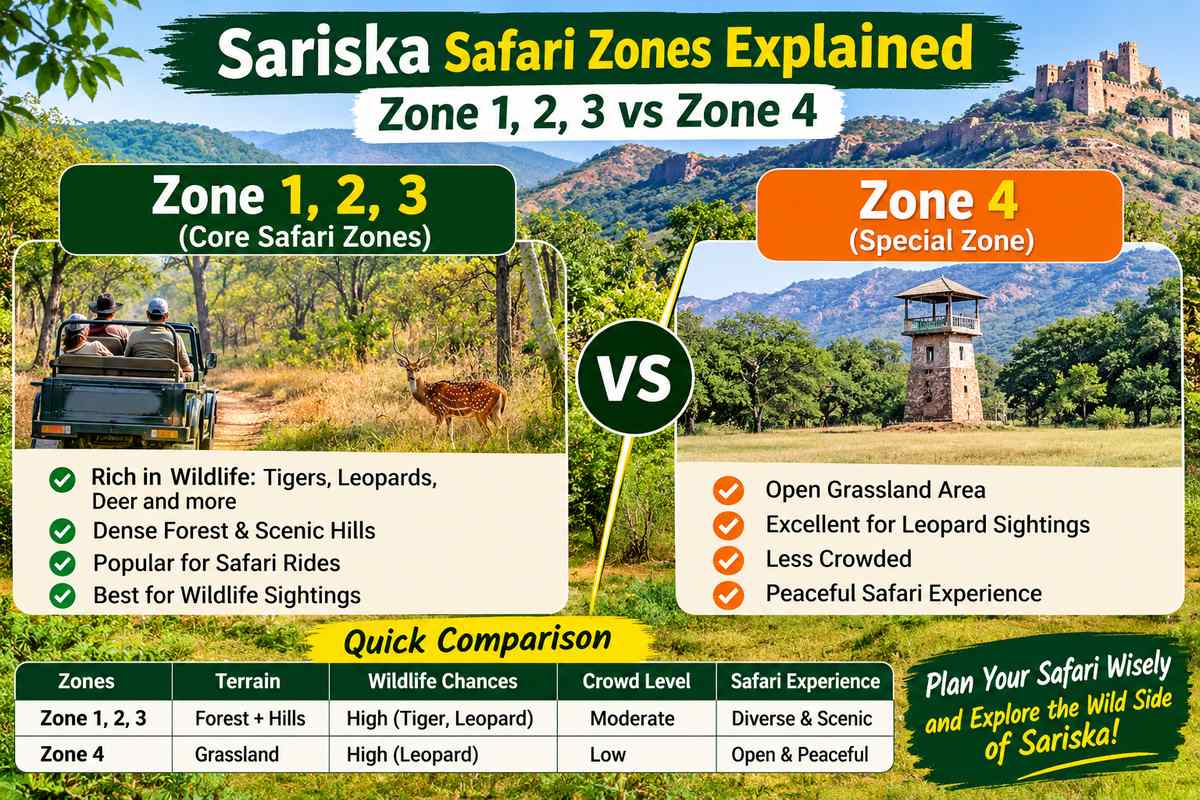
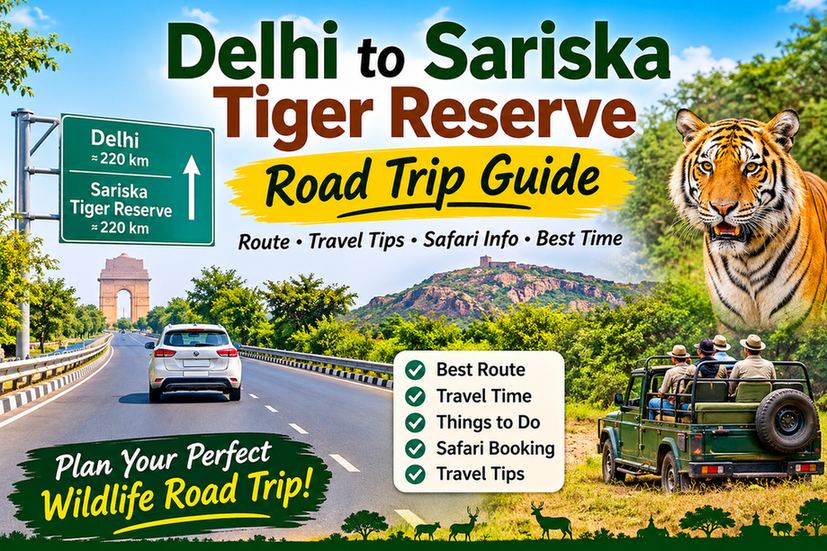
To protect the ecosystem and regulate tourist flow, jungle safaris in Sariska are divided into four main eco-tourism zones (Zone 1, Zone 2, Zone 3, and Zone 4), accessed primarily through two entry gates:
- Sariska Gate (Main Gate): Located on the Alwar-Jaipur highway, this gate provides direct access to the core zones (Zones 1, 2, and 3) and is close to most budget and mid-range hotels.
- Tehla Gate: Situated on the southern side of the reserve, Tehla Gate is popular among travelers staying at luxury jungle resorts and offers scenic routes into Zone 4 and buffer areas.
Safari Vehicle Options:
- 6-Seater Open Jeep (Gypsy): Best for small families, couples, and wildlife photographers seeking flexibility and access to narrower forest tracks.
- 20-Seater Open Canter: A budget-friendly option ideal for large groups, corporate outings, and school trips.
(Pro Tip: Daily permits are strictly limited by the forest department. To avoid last-minute disappointment—especially on weekends—you can check real-time availability and plan your itinerary through our Sariska Tiger Reserve travel desk well in advance.)
4. Safari Shift Timings
Safaris operate twice a day, with timings adjusting slightly based on sunrise and sunset hours:
- Morning Shift: 06:00 AM to 09:30 AM (Summer) | 06:30 AM to 10:00 AM (Winter)
- Evening Shift: 03:00 PM to 06:30 PM (Summer) | 02:30 PM to 06:00 PM (Winter)
Note: Visitors must report at the entry gate at least 30 minutes prior to their shift with the original government ID proof (Aadhaar Card, Voter ID, Driving License, or Passport) used during permit registration.
5. Top Historical Places Inside & Near Sariska
Unlike most national parks that offer only wildlife, Sariska is dotted with fascinating heritage landmarks:
- Pandupol Hanuman Temple: Located deep inside the reserve, this ancient temple is associated with the Mahabharata, where Bhima is believed to have created a passage through a massive hill.
- Kankwari Fort: A 17th-century hilltop fort inside the core zone where Mughal Emperor Aurangzeb once imprisoned his brother Dara Shikoh.
- Neelkanth Mahadev Temple: A 10th-century temple complex at Garh-Rajor famous for its intricate stone carvings.
- Bhangarh Fort: Situated just outside the southern boundary of Sariska, this 17th-century ruined fort is one of India's most famous historical and architectural sites.
6. Essential Tips for First-Time Visitors
- Dress in Earthy Colors: Wear dull greens, browns, or khaki clothes. Avoid bright colors like red, yellow, or white that can alert animals from afar.
- Carry Sun & Dust Protection: Open vehicles can get dusty; carry sunglasses, a cap, sunscreen, and a light scarf. In winter mornings, heavy woolens are a must as open jeeps get very cold.
- Respect Forest Rules: Maintain silence inside the jungle, never step out of the vehicle, and strictly avoid littering or feeding animals.
Ready to Explore the Wilderness of Rajasthan?
Whether you are planning a quick weekend trip from Delhi or a complete Rajasthan wildlife circuit, our on-ground team can help you coordinate permits, resorts, and guided tours seamlessly. Visit Sariska National Park home portal today to explore tour packages and check safari schedules!